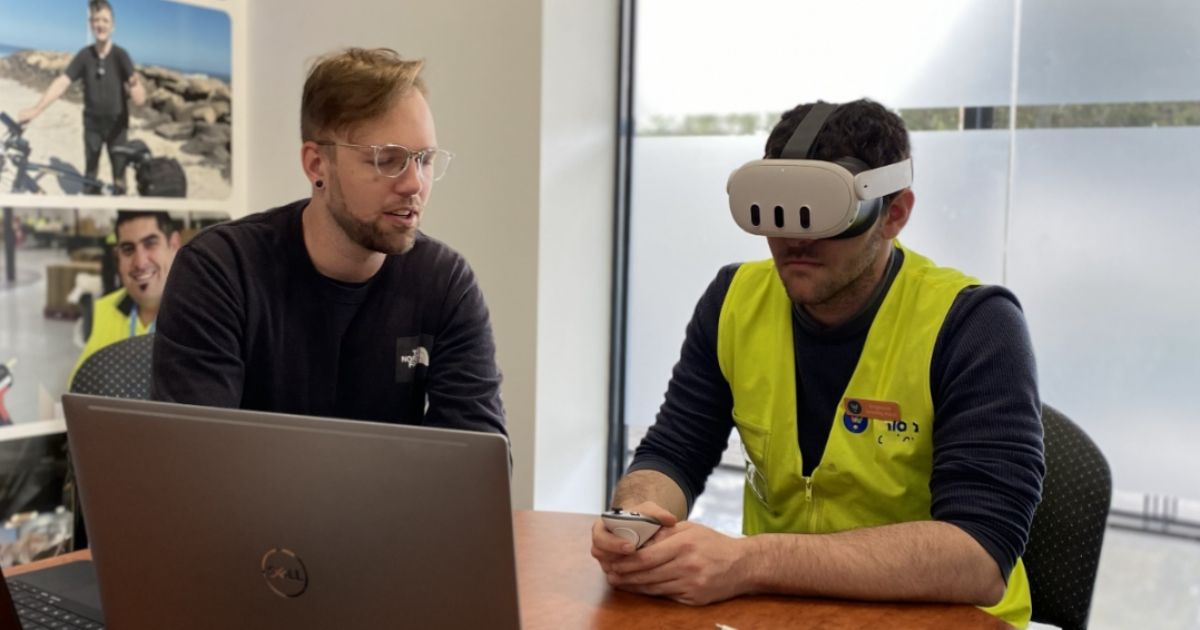
An innovative Australian-first virtual reality (VR) program is set to help more people with disabilities to consider and experience different employment settings, including open employment, without stepping foot in an actual workplace.
The completion of the large scale evaluation marks a significant step for the partnership between Monash University’s Opportunity Tech Lab and Wallara Australia Ltd, positioning the program for expansion across metropolitan Melbourne and into diverse workplaces and industries.
Designed through lived experience
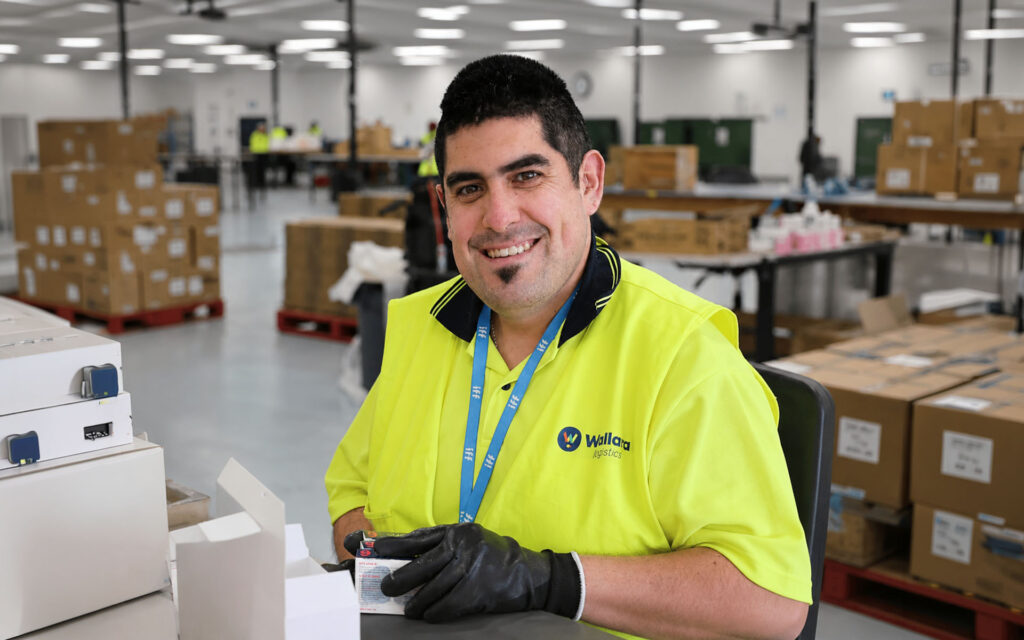
Designed in partnership with people with intellectual disabilities, their families, disability service providers and health professionals, the VR modules draw directly on lived experience. Filmed with workers who are currently employed in supported employment while also participating in open employment, the modules use virtual reality to safely expose people with intellectual disabilities in supported employment to authentic “day in the life” workplace scenarios, generating evidence on transition pathways that can inform service design and broader system reform.
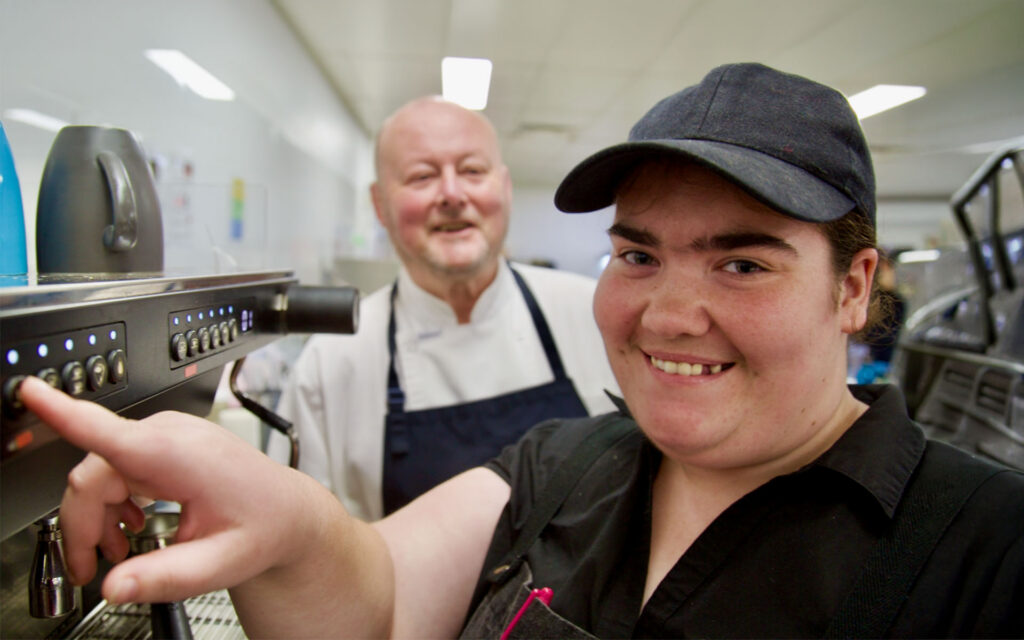
The VR modules currently offer experiences in hospitality and land management, with 28 supported employees working in Wallara’s social enterprises involved in several rounds of co-design, development, pilot and large scale evaluations with the Monash University team.
The program was made possible by funding from the Australian Government Department of Social Services.
Designed through lived experience
Liz Raffin, who lives with an intellectual disability, was part of the pilot program and says she ‘really loved it’ as a tool to experience what it would be like to work in open employment using VR.
She is part of the open employment program at Wallara Australia and says she doesn’t think she’d ever have a chance of getting a job in open employment without this support.
One of her goals, she says, is to land her first open employment job, either in a cafe or retail, later this year. Senior Open Employment Advisor at Wallara Australia, Carolyn Bloch, says many people with disabilities experiencing open employment, specifically in hospitality, can find loud noise and interactions with strangers and challenging personalities extremely daunting and overstimulating.
“This VR program allows them to get this experience virtually and have support on the spot from job coaches.”
– Carolyn Bloch
She says offering virtual access to employment scenarios in a low-pressure VR environment lets them explore workplaces and tasks, and raise any concerns about open employment, before setting foot on site. It also helps employers assess employees with disabilities for specific sectors and roles, while providing direct insight into any support they might need, she says.
Shaping the future of inclusive employment
One of the lead researchers in the program, Dr Wei Wang from Monash University’s Opportunity Tech Lab, says the extensive co-design process with supported employees and their families was critical. It allowed them to share their experiences in these environments and directly shape the VR modules’ design.
She says following this initial codesign and coproduction process, the team will further refine the modules using stakeholder input, with the enhanced modules then undergoing large-scale evaluation in March 2026, so they are finalised and ready for wider use by June 2026.